July 29, 2026

From commitment to action: Eswatini launches inclusive communities project for children with disabilities

A new partnership between Young Heroes and the Deputy Prime Minister’s Office is strengthening national systems, community support and essential services for children with disabilities.

MOU – 8 July 2026 | Mbabane, Eswatini

Launch – 16 July | UN House, Eswatini

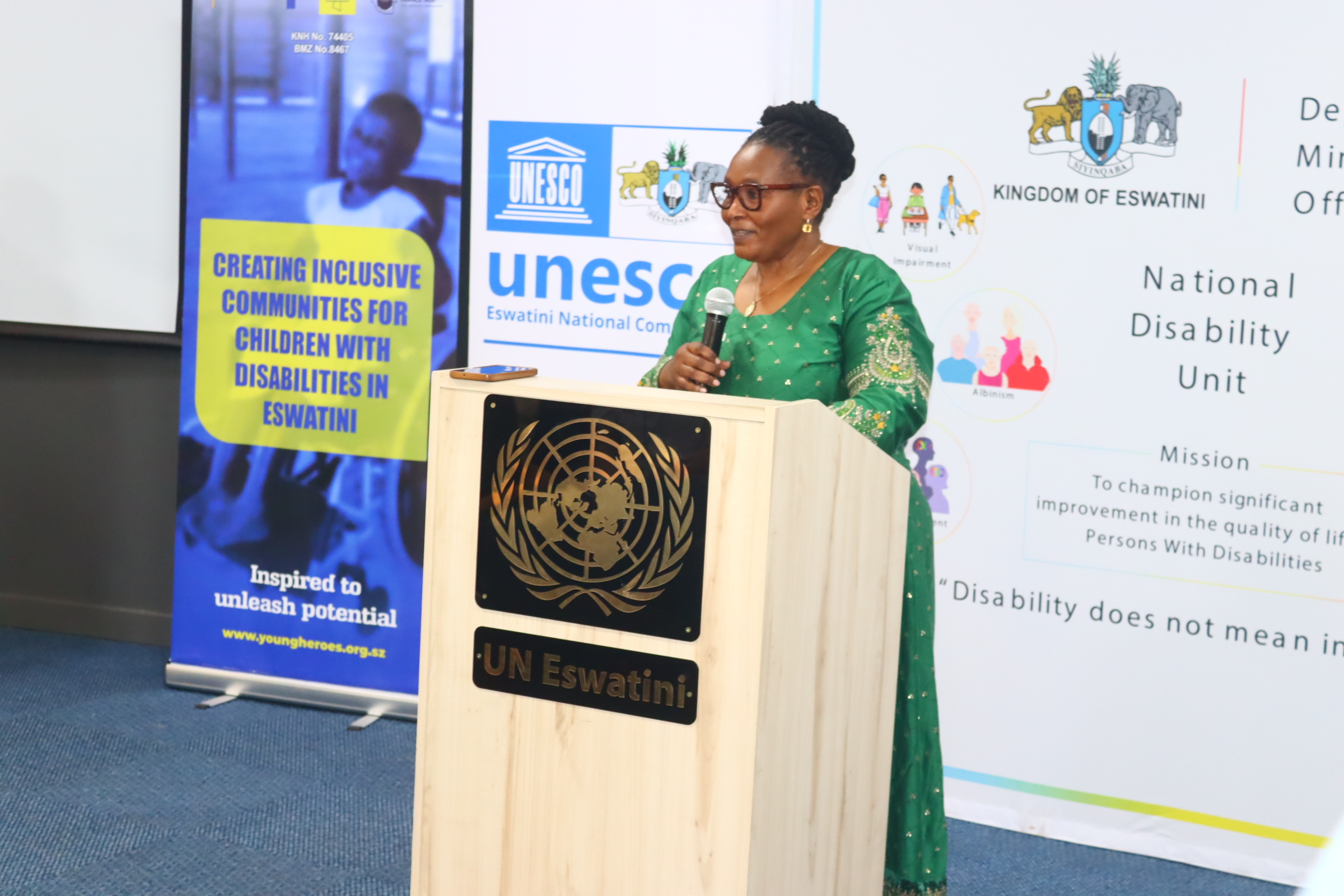
Young Heroes and the Deputy Prime Minister’s Office (DPMO) have signed a Memorandum of Understanding (MoU) and nationally launched the Creating Inclusive Communities for Children with Disabilities in Eswatini project. Together, these milestones move the initiative from formal commitment to coordinated action for children with disabilities, their families and communities across the country.
Known as Project 74405, the initiative is implemented by Young Heroes and Imbita Women’s Finance Trust, with funding from Germany’s Federal Ministry for Economic Cooperation and Development (BMZ) and Kindernothilfe (KNH) Germany. The project runs from 1 December 2025 to 1 March 2029.

Strengthening national coordination

The MoU establishes a framework for Young Heroes to support the DPMO in coordinating and implementing Eswatini’s National Disability Action Plan at national and regional levels. This work forms the fourth project objective and is intended to improve the realisation of the rights of children with disabilities.

The partnership will also strengthen the National Advisory Council for Persons with Disabilities and its Secretariat through governance and capacity building support. This will help the Council and Secretariat guide implementation of the Disability Act of 2018 and the National Disability Action Plan more effectively.

By launching the project nationally, the Deputy Prime Minister reaffirmed the Government of Eswatini’s commitment to an inclusive society in which children with disabilities can exercise their rights and access quality education, equitable healthcare, social protection and community services.

A project designed to remove barriers

The project’s overall objective is to enable children with disabilities in Eswatini to enjoy equal rights to education, healthcare, protection and inclusion, supported by sustainable, inclusive systems and empowered communities.

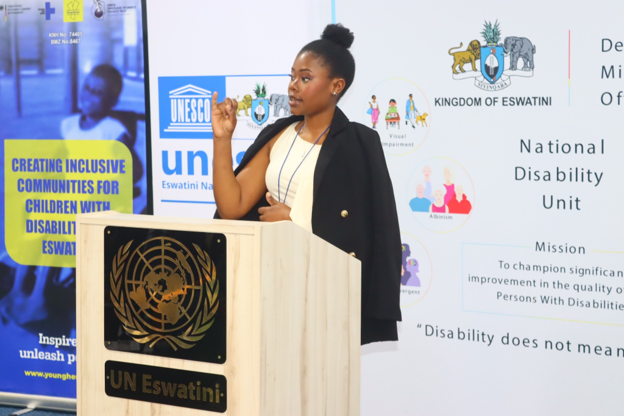
Siphesihle Sibanyoni

Siphesihle Sibanyoni delivering her speech using sign language during the national project launch.

Its four connected objectives are to:

  • increase community knowledge of the rights of children with disabilities and the support services available to them;
  • strengthen the skills of service providers so they can deliver quality social protection and health services;
  • improve inclusive learning in 14 pilot schools through individualised education plans; and
  • strengthen the DPMO’s coordination and implementation of the National Disability Action Plan at national and regional levels.

The initiative brings together government institutions, service providers and civil society. Target stakeholders include the DPMO, the Ministry of Tinkhundla Administration and Development, the Ministry of Education and Training, the Ministry of Health, the Disability Council and nongovernmental organisations. Key actors include the Disability Unit, chiefs and Tinkhundla councils, special education personnel and teachers, nurses and community health volunteers, community police, organisations of persons with disabilities and community based organisations.

 Turning policy commitments into practical change

Project 74405 will support five priority areas: communities, schools, health services, social protection and government systems. This will help national disability commitments translate into practical improvements for children. By March 2029, the project aims to achieve the following changes:

  • increase the number of children with disabilities attending school in the 14 target communities by 68%, from 250 to 420;
  • increase the use of healthcare facilities by persons with disabilities in the target communities, with children with disabilities accounting for at least 10% of patients treated by participating clinics;
  • support 80% of teachers in the 14 target schools to use inclusive education methods through individualised education plans;
  • introduce DPMO guidelines and standard operating procedures that strengthen disability mainstreaming across government, the private sector and civil society organisations; and
  • ensure trained community police officers in the 14 target communities understand relevant laws and referral mechanisms for protecting children with disabilities.

A shared commitment to inclusion

The MoU and national launch demonstrate a shared commitment to stronger systems that include children with disabilities and ensure that no child is left behind. The project supports Eswatini’s national commitments to children’s rights and inclusive development, while contributing to the United Nations Convention on the Rights of Persons with Disabilities and the Sustainable Development Goals.

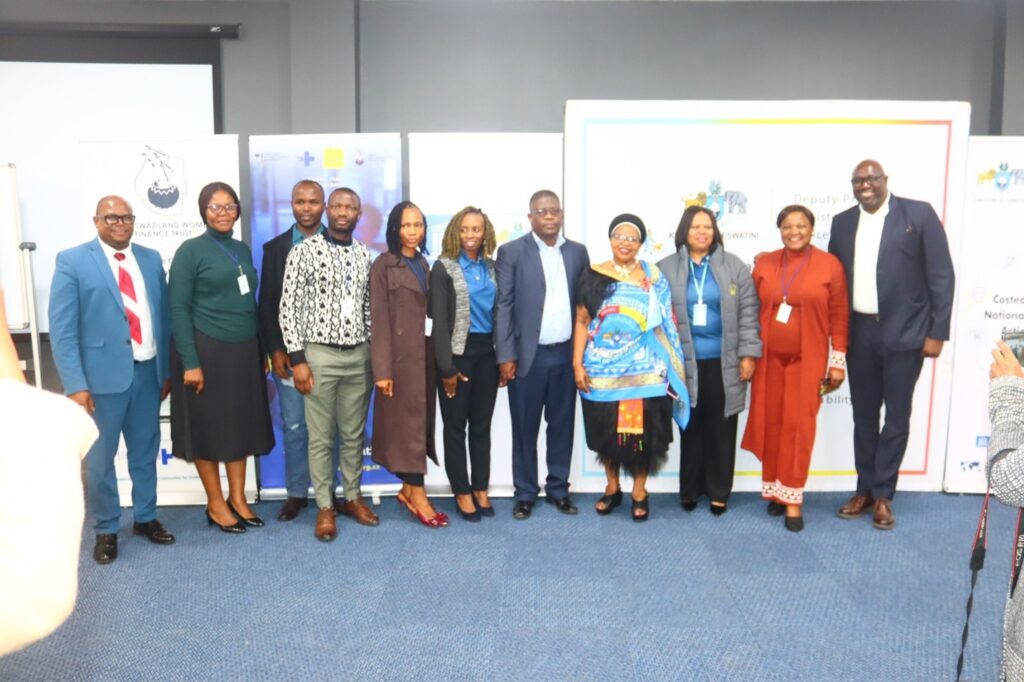
Government and civil-society representatives display the National Disability Plan of Action, reflecting a shared commitment to coordinated implementation.

Through coordinated leadership, stronger services and empowered communities, the initiative seeks to reduce barriers to inclusive education and equitable healthcare, strengthen protection, and address stigma and discrimination against children with disabilities.

News in Brief

Safe, Confidential Reporting

On Young Heroes’ new portal for Whistleblowing, Speak Up, report abuse safely and confidentially.

Young Heroes Foundation Named a Great Nonprofit

Visit our page and read our reviews.

Young Heroes awarded a Great Nonprofit.